Skip to content

CRM · roofing contractors

CRM for roofing contractors: stop storm enquiries and re-roof quotes going cold

The short answer

CRM for roofing contractors

A CRM for roofing contractors catches every enquiry, from the storm-day rush to a slow-burning re-roof quote, and chases each one on a schedule. For most firms the gap isn't leads, it's follow-up: calls missed in a surge and quotes never chased. It runs while you're up a ladder.

A CRM is the system that catches every roofing enquiry and follows it up, from the phone ringing off the hook after a gale to a re-roof quote a homeowner is mulling over for three weeks. Roofing demand arrives in two very different rhythms, and a CRM has to hold both. Storm and emergency work floods in all at once and is won by whoever answers, so it needs instant capture and missed-call follow-up. High-value planned re-roofs are decided slowly on proof and price, so they need a patient chase, not a single quote and silence. Add the insurer and builder relationships that only stay warm if someone keeps in touch, and the case is clear: get every enquiry into one place, and you stop handing hard-won work to the firm down the road.

Why should a roofing contractor care about a CRM?

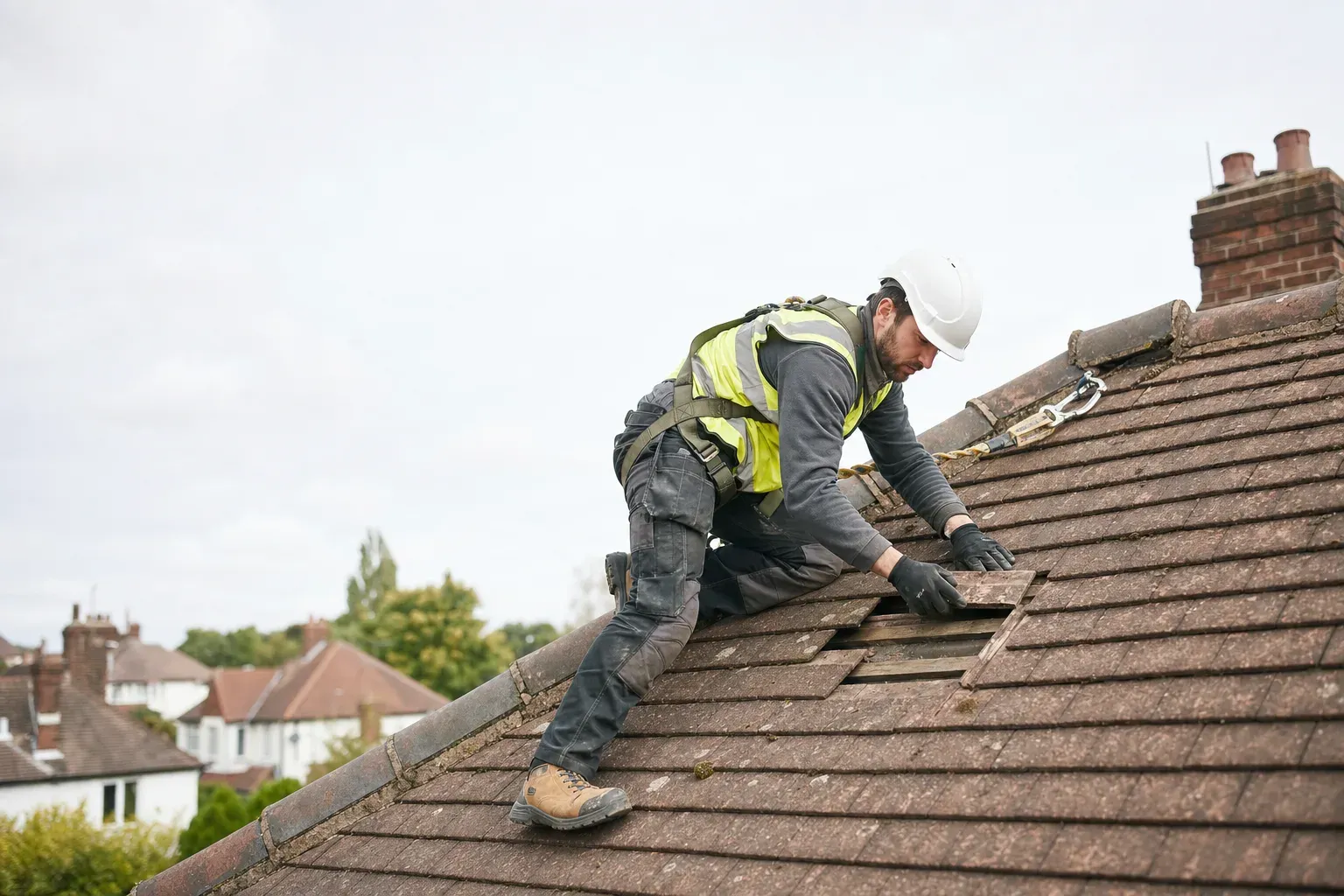
A gale blows through overnight. By seven the next morning half your patch has slipped tiles, a lifted ridge or water coming through a bedroom ceiling, and every one of them is reaching for a phone. Your mobile lights up while you're already up a ladder on the first job, hands full, wind in your ears. You clear that roof, come down, and there are eleven missed calls, four voicemails and a couple of texts. You'll get to them. You get to the next emergency instead, then the next, and by the weekend most of those callers have booked whoever picked up first.

None of those jobs slipped away because you're not a good roofer. They slipped because a surge of enquiries arrived faster than one person can answer, and nobody caught the overflow. That's the part rarely said out loud: most of the time it isn't a lead problem, it's a follow-up problem. In a storm you get more enquiries in a morning than in a normal fortnight, and without a system to hold them, you're leaving work on the table for the next firm on the list. Across roughly 12,000 UK roofing businesses (IBISWorld, 2025), the ones that grow aren't the ones the storm favours, they're the ones that let the fewest callers go unanswered. Want the bigger picture first? Start with our full guide to marketing for roofing contractors.

A CRM is simply the thing that catches every one of those enquiries and makes sure it gets chased, whether you had a spare hand that morning or not.

How does a CRM actually work for a roofing business?

Strip it back and a CRM does one job: it collects every enquiry in a single place and tells you what happens next. A call, a website form, a message, a referral from a builder, all of it lands in the same pipeline instead of scattering across your phone, your inbox and a scrap of paper in the van. Nothing rides on you remembering.

What makes roofing different is that your work arrives in two speeds. Storm and emergency jobs come in a rush and get decided in minutes, so a CRM meets them with instant capture and missed-call follow-up. When the phone rings out during a surge, it can fire back an automatic text ("Roof leak? We've got you. We're flat out on storm calls, we'll ring you within the hour"), so the caller waits for you instead of dialling the next roofer. In weather that brought a record £585m in weather-related home insurance claims in 2024 (ABI, February 2025), that overflow catch is the difference between a busy week and a wasted one.

The other speed is the planned re-roof, decided over days or weeks on quotes, reviews and guarantees. That half needs a patient sequence: send the quote, nudge a few days on, check in the week after. Same system, two rhythms, plus a steady drip to the builders and insurers who feed you repeat work. That's what getting it out of your head and into a system looks like on a roof.

When is a CRM the wrong move for a roofing contractor?

There are two moments when it genuinely isn't the answer, and it's worth being straight about both before you spend a penny.

The first is when almost nothing is coming in. A CRM chases enquiries, it doesn't conjure them, and if the phone stays silent even after a storm has rolled through, organising an empty pipeline solves nothing. Demand has to come first. In an unlicensed trade where anyone can call themselves a roofer, being found and looking trustworthy is what turns weather into work, so your money is better spent earlier: on ads that put you in front of people the moment a tile blows off, or on the reviews and Google Business Profile that win the local search. Come back to a CRM once there's a flow worth protecting.

The second catches people out. A CRM bought as a piece of software and never actually set up is worse than the notebook it replaced, because at least you trusted the notebook. We've seen roofers pay every month for a slick system that sits empty while a re-roof quote quietly dies in a text thread. The value is in the routine, not the login. If nobody is going to log the storm calls, build the follow-up cadence and keep the builder list warm, the tool won't save you. Sort the habit first and buy the software second. And if you're a genuine one-man band who answers every call and chases every quote without fail, you might not need one yet, though most roofers we meet are honest enough to admit the surge beats them.

What does good follow-up look like for a roofer?

Every enquiry gathered into one view, whatever the weather sent it. A storm call, a website form for new fascias, a rung-out mobile during a downpour, a builder asking about a sub-let job: all in the same pipeline, none of it stuck in your head or buried on your phone.

A quick first reply on the storm half, because in a surge the firm that answers wins. When you can't take a call from the ridge, the system covers the opening move: an automatic text and a callback prompt that won't let a leak enquiry drift into silence. A rung-out phone in a gale is still winnable, not a write-off.

A patient chase on the planned half. A re-roof runs into five figures and a homeowner takes their time over it, lining up two or three quotes and weighing the guarantees before committing. When yours goes out, the system prompts you to circle back: a nudge a few days on, a check-in the following week, so a big quote never dies of silence.

And a warm line to the trade. Builders, letting agents, insurers and loss adjusters who feed you repeat work only keep feeding it while someone stays in touch, and a CRM turns that from a good intention into a scheduled task. That whole-pipeline view, storm to re-roof to repeat, is what begins to lift you off the ladder and lets the business run on a system rather than your memory.

Looking to grow your roofing contractors business with CRM?

The free call is with a trades and construction marketing specialist. Ask your questions and get a clear understanding of how CRM works for roofing contractors businesses like yours, and how it helps you grow.

What follow-up mistakes cost roofers the most work?

The same ones surface on nearly every roofing firm we look at.

Losing the storm surge. When a gale sends a fortnight's enquiries in a morning, the calls you can't answer aren't gone, they're leads waiting for a text back and a callback. Roofers who write them off hand the busiest week of the year to whoever picks up next.

Quoting once and going quiet. A re-roof is a slow, considered purchase, and the homeowner is juggling their own life. Send the quote, wait, and you'll assume they went cheaper when really they just needed a nudge. Big roofing quotes die from silence far more than from price.

Letting the trade relationships cool. A builder or insurer who used you last winter forgets you by this one if you never keep in touch. That repeat channel is some of the steadiest work in roofing, and it slips quietly when follow-up isn't scheduled.

Scattering it all over the place. Some enquiries on the phone, some in email, some scrawled on a delivery note. When leads live in three spots, the gaps between them swallow jobs, and the enquiries your ads and search work so hard to produce are wasted if they land somewhere they'll be forgotten. Measure none of it and you'll never even see what you're losing.

What does a CRM cost a roofing contractor, and is it worth it?

On price, plainly: a simple tool costs a modest monthly fee, more capable ones cost more, and the licence price is rarely what decides whether it pays. Setup and daily use decide that. A cheap system worked every day beats a pricey one nobody opens.

Weigh it this way. A CRM doesn't conjure fresh leads, it rescues the ones already leaking away through thin follow-up. Picture a storm week: one unanswered leak call that becomes a rival's re-roof, against a full re-roof averaging around £8,000 (Checkatrade, 2026), and catching that single job covers the system for a long time over. You're not buying more weather, you're holding on to the work the weather already handed you.

Beware the firm that promises a fixed return before it has even seen your enquiry flow and your slippage. In a trade run on proof rather than promises, that's your cue to walk away. Put simply, a CRM pays by rescuing jobs already within reach, never by dangling a multiplier. If barely anything escapes your follow-up now, hold off. Most roofing firms, honest with themselves, know a storm loses them plenty.

How does a roofing contractor get started with a CRM?

Begin with the number, not the login. In your last real storm week, how many enquiries reached you, and how many did you carry all the way to a yes or a no? When that gap makes you wince, you're looking at the work slipping away, and closing it is precisely the job a system does.

Before anything clever, pull the essentials into a single view: a running record of every open enquiry, a rule for how quickly you reply when the phone floods, and a routine for chasing re-roof quotes and trade contacts on set days. Done consistently, that alone claws back jobs, because the habit matters more than the tool. Video earns its place alongside it, since showing your finished roofs and your guarantee on camera breaks down a wary homeowner's caution and warms them before you ever pick up the quote to chase it.

Prefer it built for you, every source wired in and every lead chased? That's what our CRM setup for trades handles. Either way, book a 20-minute call and we'll trace where your enquiries start, where they go cold, and whether a CRM is your next move or whether something comes first. Straight answers, no jargon, no pressure.

FAQ

Frequently asked questions

Isn't a CRM overkill for a small roofing firm?

Not if a storm regularly beats you for calls, and for a small firm it always will, because you can't answer a phone from the top of a roof. The point isn't a corporate system, it's one place for every enquiry and a habit of chasing them. A one or two-van roofer often gains the most, because there's nobody else to remember, and a system remembers so you don't have to lose the surge.

I keep everything on WhatsApp and in my head. Why change?

Because that's exactly where a storm week overwhelms you. When a fortnight of enquiries lands in one morning, a phone and a memory can't hold them, and you can't see your whole pipeline in a glance. WhatsApp won't text a missed leak call back or remind you to chase a re-roof quote on day three. If nothing ever slips through, keep it. Most roofers find plenty slips when the weather turns.

Will a CRM get me more storm work?

No, and be wary of anyone who claims it will. A CRM follows up the enquiries a storm already sends you; it doesn't make the weather or the searches. If your phone stays quiet even after a gale, you need to be found first, through ads and local search, not a system to organise nothing. What it does is stop you losing the leak calls and re-roofs you've already earned, which is where most roofers leak money.

How does missed-call follow-up work in a storm surge?

When calls flood in during a gale and one rings out while you're on a roof, the system texts that caller straight back: a quick note that you're on storm jobs and will ring them within a set time. It keeps the lead waiting for you instead of dialling the next roofer down the list. In a surge, where whoever answers wins the work, that one automation often pays for the whole system in a single week.

Can a CRM help with builder and insurer work, not just homeowners?

Yes, and that's often the quiet win. Builders, letting agents and insurers who send repeat roofing work only keep sending it if you stay in touch, and a CRM turns that from a good intention into a scheduled task: a check-in after a job, a periodic hello, a reminder to send an updated rate. That steady drip keeps a channel warm that most roofers let cool through simple neglect.

Next step

See what intelligent growth looks like for your business.